

FABER Test (Patrick’s test)
- Fysiobasen
- Sep 14, 2025
- 4 min read
The FABER test – an acronym for Flexion, Abduction, and External Rotation – is a passive clinical test designed to provoke pain and identify dysfunction in the hip joint, lumbar spine, or sacroiliac (SI) joint¹. It is used as a screening tool to evaluate persistent pain in the hip, groin, or lower back, and may also indicate irritation of the iliopsoas or pathology in the hip capsule or labrum².
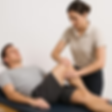
By placing the leg in a “figure four” position and applying gentle pressure, mechanical stress is transferred through the femur to both the hip and sacroiliac joint, making it useful in differentiating intra-articular from periarticular pathology³.
Test Position and Technique
Starting position:
Patient lies supine.
The tested leg is placed in figure-four position: flexion, abduction, and external rotation of the hip.
The lateral malleolus rests on the opposite thigh, just above the knee⁴.
Execution:
Examiner stabilizes the pelvis by holding the contralateral PSIS or ASIS.
Gentle downward pressure is applied on the knee until end-range is reached.
Small oscillations may be applied to assess pain at end-range.
Positive test criteria:
Reproduction of the patient’s familiar pain.
Clear restriction of motion⁵.
Interpretation of Findings
Pain in anterior hip or groin:
Iliopsoas irritation or spasm
Intra-articular hip pathology
Labral tear
Femoroacetabular impingement (FAI)
Hip osteoarthritis⁶
Pain in posterior hip or buttock:
Sacroiliac joint dysfunction
Sacroiliitis
Posterior hip impingement
Loose body or chondral lesion⁷
General stiffness or pain with external rotation:
Hip capsulitis or degenerative changes
Reproduction of neuropathic pain from lumbar pathology (e.g., referred pain from L2–L4)⁸
Clinical Relevance and Application
The FABER test is valuable in early clinical assessment but should never be used as a stand-alone diagnostic tool. It can guide further evaluation such as:
Imaging (MRI, X-ray)
Functional tests like hip quadrant or scour test
Mobility and pain provocation assessment⁹
Its strength lies in symptom reproduction, but it has limited value for identifying a specific cause without further testing¹⁰.
Evidence and Validity
Parameter | Result |
Intrarater reliability with inclinometer | ICC 0.91¹¹ |
Sensitivity for hip pathology (arthroscopy) | 0.89¹² |
Sensitivity for labral tear | 41% (low) |
Specificity for labral tear | 100% (high)¹³ |
Correlation with radiographic osteoarthritis | r = 0.54 |
Kappa (inter-examiner agreement) | 0.63 (95% CI: 0.43–0.83) |
Clinician agreement | 84%¹¹ |
Assessment of evidence:
High specificity for certain conditions (e.g., labral tears).
Low sensitivity means a negative test does not rule out pathology¹³.
Inclinometer use improves reliability compared to visual assessment.
Evidence is mixed: some studies question the test’s utility, while others highlight its value when used in a test cluster¹⁴.
Summary
The FABER test is a simple yet widely applicable maneuver for assessing pain and stiffness in the hip, lumbar spine, and sacroiliac joint. It cannot serve as a sole diagnostic tool but provides valuable information when combined with history and additional tests. It is particularly useful for differentiating anterior from posterior hip pain and should be part of the standard clinical assessment in patients with nonspecific hip complaints.
Sources:
Martin RL, Sekiya JK. The interrater reliability of 4 clinical tests used to assess individuals with musculoskeletal hip pain. J Orthop Sports Phys Ther. 2008;38(2):71–77.
Dutton M. Orthopaedic: Examination, Evaluation, and Intervention. 2nd ed. New York: The McGraw-Hill Companies, Inc; 2008.
Broadhurst NA, Bond MJ. Pain provocation tests for the assessment of sacroiliac joint dysfunction. J Spinal Disord. 1998;11(4):341–345.
Philippon MJ, Stubbs AJ, Schenker ML, Maxwell RB, Ganz R, Leunig M. Arthroscopic management of femoroacetabular impingement: osteoplasty technique and literature review. Am J Sports Med. 2007;35(9):1571–1580.
B, McCroy P, Brukner P, et al. Hip joint pathology: Clinical presentation and correlation between magnetic resonance arthrography, ultrasound, and arthroscopic findings in 25 consecutive cases. Clin J Sports Med. 2003;13:152–156.
Reiman MP, Goode AP, Hegedus EJ, Cook CE, Wright AA. Diagnostic accuracy of clinical tests of the hip: a systematic review with meta-analysis. Br J Sports Med. 2013;47(14):893–902.
Tijssen M, van Cingel R, Willemsen L, de Visser E. Diagnostics of femoroacetabular impingement and labral pathology of the hip: a systematic review of the accuracy and validity of physical tests. Arthroscopy. 2012;28(6):860–871.
Flynn T, Cleland J, Whitman J. User’s Guide to the Musculoskeletal Examination: Fundamentals for the Evidence-Based Clinician. Buckner, Kentucky: Evidence in Motion; 2008.
Troelsen A, Mechlenburg I, Gelineck J, Bolvig L, Jacobsen S, Søballe K. What is the role of clinical tests and ultrasound in acetabular labral tear diagnostics? Acta Orthop. 2009;80(3):314–318.
Faber Test | Patrick Faber’s Test for Hip Pain. Tilgjengelig fra: https://www.youtube.com/watch?v=nFza4MJv2Uo
Bagwell JJ, Bauer L, Gradoz M, Grindstaff TL. The reliability of FABER test hip range of motion measurements. Int J Sports Phys Ther. 2016;11(7):1101.
Theiler R, Stucki G, Schotz R, Hofer H, Seifert B. Parametric and non-parametric measures in the assessment of knee and hip osteoarthritis: interobserver reliability and correlation with radiology. Osteoarthritis Cartilage. 1996:35–42.
Cattley P, Winyard J, Trevaskis J, Eaton S. Validity and reliability of clinical tests for the sacroiliac joint. A review of literature. Australas Chiropr Osteopathy. 2002;10(2):73–80.
Vleeming A, Albert HB, Ostgaard HC, Sturesson B, Stuge B. European guidelines for the diagnosis and treatment of pelvic girdle pain. Eur Spine J. 2008;17(6):794–819.


