

Amyotrophic Lateral Sclerosis (ALS)


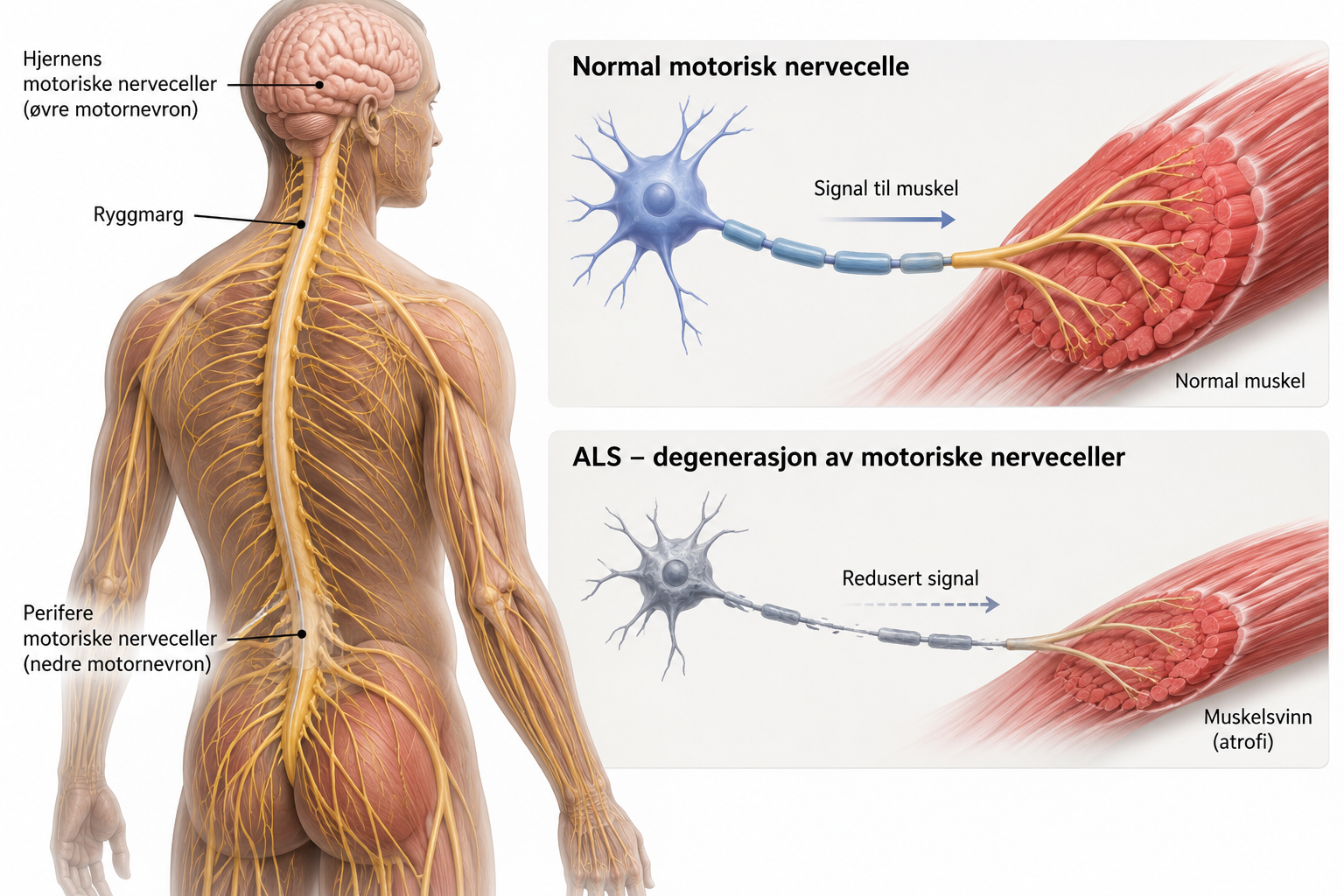
Amyotrophic lateral sclerosis (ALS), also known as Lou Gehrig's disease, is a fatal neurological disorder that develops in adulthood, usually between the ages of 54 and 67. ALS belongs to the group of motor neuron diseases (MND). Clinically, it is characterized by degeneration of both upper and lower motor neurons, leading to progressive muscle wasting and weakness that ultimately develops into paralysis. Death often occurs because of swallowing difficulties and respiratory failure, usually within 2–4 years after disease onset, although 5–10% of people with ALS survive for more than 10 years¹.
Physiotherapy plays a central role within the multidisciplinary ALS team and is based on rehabilitation and active-lifestyle principles. Although the disease is rapidly progressive and currently has no cure, physiotherapy tailored to the individual's needs and goals can help the person maintain the highest possible quality of life².
Epidemiology and Prognosis
The incidence and prevalence of ALS increase with age, and the cumulative lifetime risk is approximately 1 in 400 by the age of 80. Because the global population is aging, the number of ALS cases has been projected to increase substantially over the coming decades. This highlights the need to identify causes, biomarkers, and therapeutic targets for ALS¹.
The disease was first described in 1824, and in 1869 Jean-Martin Charcot linked the symptoms to underlying neurological pathology involving the corticospinal tracts. In 1874, Charcot began using the term amyotrophic lateral sclerosis (ALS). The disease later received considerable public attention in the United States after baseball player Lou Gehrig was diagnosed, and again through the Ice Bucket Challenge in 2014.
Incidence
ALS is the most common motor neuron disease in adults[4][5]. The annual incidence is approximately 1–2.6 cases per 100,000 people, with a prevalence of about 6 per 100,000[6][5]. In the United Kingdom, around 2 per 100,000 people are diagnosed each year, and approximately 5,000 people are living with ALS at any given time[7].
In approximately half of patients, the average survival from symptom onset to death is 2–4 years.
Only about 20% of patients survive for more than 5 years.
Approximately 5% of patients are diagnosed before the age of 47.
Incidence is highest between the ages of 55 and 65.
Clinical reports indicate that the number of younger people diagnosed with ALS is increasing.
Prognostic factors[8]
Younger patients, particularly those under 35–40 years of age, have better 5-year survival.
People whose symptoms begin in the limbs have better five-year survival (37–44%) than those with bulbar-onset symptoms (9–16%).
Patients with better psychological well-being and social support at disease onset may have longer survival.
The disease course ranges from a few months to 20 years, with an average duration of approximately 27–43 months.
Five-year survival rates range from 9% to 40%.
Ten-year survival rates are approximately 8–16%.
Causes and Pathophysiology
The causes of amyotrophic lateral sclerosis (ALS) remain largely unknown, but several factors are thought to be involved, including environmental risk factors¹. Genetic mutations have also been identified in some cases of ALS².
Genetics – Although genetic changes are not present in every case, mutations have been identified in some individuals. In these cases, multiple cases of ALS may occur within the same family³.
Biochemistry – Motor neuron disease appears to involve activation of calcium-dependent enzymatic pathways. Premature aging or dysfunction of certain motor neurons may contribute to cellular injury and loss, placing additional demands on surviving neurons.
Sporadic MND
Sporadic ALS accounts for approximately 90–95% of cases. It is more common in men and has an annual incidence of around 1–2 per 100,000 people[5].
Familial MND
A family history of motor neuron disease or a related condition such as frontotemporal dementia is a risk factor. Familial ALS is often inherited in an autosomal dominant pattern and accounts for approximately 5–10% of all ALS cases. The average age of onset is around 47 years[5].
Pathophysiology
As the disease progresses, motor neurons are lost from the anterior horns of the spinal cord, the primary motor cortex, and motor nuclei in the lower medulla, including the hypoglossal nucleus. Shrinkage and discoloration of anterior spinal nerve roots may occur as a result of axonal degeneration and subsequent demyelination¹¹.
The pathophysiology of ALS appears to be multifactorial, involving complex interactions between genetic factors and molecular pathways².
Potential cellular and molecular mechanisms contributing to neurodegeneration in MND[10][12]:
Abnormal mitochondrial function
Increased oxidative stress
Increased free radicals
Impaired axonal transport
Dysfunction of the sodium-potassium pump
Increased inflammatory mediators
Increased secretion of toxic substances
Protein mutations affecting RNA metabolism
Glutamate excitotoxicity – reported plasma levels up to approximately twice normal
Potential gene mutations that are harmful to neurons and may contribute to disease development:
TARDBP
FUS²
Regardless of the specific pathway involved, demyelination may occur in several regions of the spinal cord, while the posterior columns are typically relatively spared.
Clinical Manifestations
Initial symptoms may be mild and go unnoticed. ALS may begin with intermittent muscle twitching, weakness, and in some cases speech disturbance. The pattern and rate of progression vary between individuals[7][13].
Early Symptoms
Symptoms vary depending on the site of onset, but ALS typically presents with a combination of upper and lower motor neuron signs.
Lower motor neuron signs:
Asymmetric weakness in the distal limbs that progresses proximally – often an early sign
Upper-limb extensors may become weaker than flexors, particularly in the hands; postural changes such as head drop and increased lumbar lordosis may also occur
Bulbar signs: weakness of facial muscles, dysarthria, dysphagia, tongue fasciculations, and drooling[8]
Upper motor neuron signs:
Spasticity
Loss of dexterity
Loss of strength
Pseudobulbar affect
Hyperreflexia
Positive pathological reflexes such as Babinski and Hoffmann signs
Clonus[8]
The oculomotor system and posterior columns of the spinal cord are typically relatively spared, meaning that eye movements, sensation, and bowel and bladder function often remain intact until late in the disease course.
Limb-onset disease:
Reduced grip strength
Weakness in the shoulder and ankle or hip
Widespread muscle twitching (fasciculations)
Muscle cramps
Visible muscle atrophy with substantial weight loss
Respiratory-onset disease:
Difficulty breathing
Shortness of breath
Frequent waking at night due to breathing difficulty or reduced ventilation while lying down
Advanced Symptoms
Muscle weakness
Muscle atrophy
Difficulty with movement
Spasticity
Increased drooling due to impaired swallowing
Thicker secretions that can be difficult to clear from the chest or throat because of muscle weakness
Increased yawning
Emotional changes
Difficulties with concentration, planning, and language
Frontotemporal dementia – this can affect problem-solving and the ability to respond appropriately to new situations[4]
End-Stage Symptoms
Increasing paralysis
Severe shortness of breath
Astrocytic gliosis and cortical involvement may be present in later stages of the disease and can affect executive function, attention, and language comprehension in a substantial proportion of individuals[8][14]
Secondary Symptoms
These symptoms are not caused directly by motor neuron degeneration but may be related to the psychological and practical burden of living with the disease.
Depression
Insomnia
Anxiety
Diagnosis
There is no single simple test that definitively diagnoses ALS in an individual[13]. However, characteristic clinical features can guide clinicians toward the diagnosis. The El Escorial criteria describe features that should be present for an ALS diagnosis, although they are not exclusive. The criteria classify diagnostic certainty into different categories depending on the extent of upper motor neuron (UMN) and lower motor neuron (LMN) degeneration, provided these findings cannot be explained by another neurological disorder. Clinicians use a combination of approaches such as electromyography and neuroimaging to identify UMN and LMN degeneration. Research has also investigated advanced imaging approaches, including whole-brain magnetic resonance spectroscopic imaging (MRSI), as potential future tools for assessing functional loss in ALS.
With the exception of specific genetic tests that can identify some ALS-associated mutations, there is no single definitive diagnostic test or universal biological marker for ALS, and not every person with ALS has an identifiable pathogenic mutation.
Revised El Escorial Criteria for the Diagnosis of ALS: [13]A diagnosis of amyotrophic lateral sclerosis (ALS) requires:
Presence of:
Evidence of lower motor neuron (LMN) degeneration by clinical, electrophysiological, or neuropathological examination.
Evidence of upper motor neuron (UMN) degeneration by clinical examination.
Progressive spread of symptoms or signs within one region or to other regions, as determined by history or examination.
Together with:
Absence of:
Electrophysiological or pathological evidence of another disease process that could explain the LMN and/or UMN degeneration.
Neuroimaging evidence of another disease process that could explain the observed clinical and electrophysiological findings.

Treatment and Management
There is increasing evidence that ALS should be regarded as a multisystem condition rather than solely a motor disorder. There is currently no cure, so management focuses on supportive care aimed at maintaining quality of life[7]. Treatment should take a holistic approach because the disease can place a major burden on both the individual and their family. Care should address not only physical problems but also emotional and psychosocial needs[6].
Physiotherapy, respiratory care, occupational therapy, and social support are important components of ALS management. Dietitians can help ensure adequate and balanced nutrition, which is important because people with ALS may lose weight as swallowing becomes impaired. They can also advise on dietary factors that may influence secretion consistency, such as dairy products[4].
As the disease progresses, breathing gradually becomes more difficult. Non-invasive ventilation can significantly improve quality of life and may also prolong survival in selected patients[15].
Physiotherapy
Because people with ALS (PALS) can present very differently, prognosis varies widely, and the disease is usually rapidly progressive, physiotherapists are continually challenged to develop the most appropriate intervention plan. The physiotherapist must understand the nature and likely course of the disease and consider future problems as well as the patient's current status. Appropriate clinical decisions require assessment of activity limitations and participation restrictions. Decision-making includes identifying which impairments, activity limitations, and participation restrictions:
Can be restored or improved
Require compensatory strategies or interventions
Require referral to another healthcare professional
Cannot be meaningfully altered by physiotherapy interventions[2]
Many problematic symptoms associated with ALS can be addressed with appropriate physiotherapy interventions[2], including:
Fatigue (energy conservation)
Muscle stiffness (stretching exercises)
Muscle cramps (stretching exercises)
Pain (intervention depends on the source of pain)
Exercise should focus on maintaining posture, preventing joint stiffness, and limiting secondary deconditioning as muscle weakness and atrophy progress. Stretching and appropriately dosed strengthening can help maintain range of motion, reduce stiffness, and support circulation.
Physiotherapy can help preserve independence throughout the disease course. Gentle, low-impact aerobic exercise such as walking, swimming, and stationary cycling may help maintain unaffected muscle groups, cardiovascular fitness, and general well-being while reducing deconditioning, low mood, and contracture risk.
Current and Future Research
ALS research can broadly be divided into three major areas: pharmacological treatment, gene therapy, and stem-cell research[10].
Although a 2019 review[21] supports potential benefits of exercise in ALS, uncertainty remains regarding the optimal type, dose, and timing of physical activity. Exercise alone is not sufficient to slow disease progression or improve survival, but it may be a useful adjunct to pharmacological treatment. Given the limited disease-modifying treatment options currently available, non-pharmacological approaches such as appropriately prescribed physical activity remain clinically relevant.
Clinical trials investigate whether different medications and interventions are safe and effective in slowing ALS progression.
Cellular and molecular studies aim to better understand the mechanisms that trigger motor neuron degeneration[6].
Sources:
Vijayakumar UG, Milla V, Stafford C, Bjourson T, Duddy WJ, Duguez SR. A systematic review of suggested molecular strata, biomarkers and their tissue sources in ALS. Frontiers in neurology. 2019;10:400.: https://www.frontiersin.org/articles/10.3389/fneur.2019.00400/full
Dal Bello-Haas V. Physical therapy for individuals with amyotrophic lateral sclerosis: current insights. Degenerative neurological and neuromuscular disease. 2018;8:45. : https://www.ncbi.nlm.nih.gov/pmc/articles/PMC6065609/
Neuroscientifically Challenged ALS: https://www.youtube.com/watch?v=kOnk9Hh20eg&app=desktop
Marsden, R. Motor neurone disease: an overview. Primary
Talbott EO, Malek AM, Lacomis D. The epidemiology of amyotrophic lateral sclerosis. In Handbook of clinical neurology 2016 Jan 1 (Vol. 138, pp. 225-238). Elsevier.
National Institute of Neurological Disorders and Stroke. Amyotrophic Lateral Sclerosis (ALS) Fact Sheet, NINDS, Publication date June 2013. NIH Publication No. 16-916
NHS Information http://www.nhs.uk/Conditions/Motor-neurone-disease/Pages/Symptoms.aspx
O’Sullivan SB, Schmitz TJ, Fulk G. Physical rehabilitation. F.A. Davis; 2019. p712-752.
Martin S, Al Khleifat A, Al-Chalabi A. What causes amyotrophic lateral sclerosis?. F1000Research. 2017;6.
Kiernan, M.C., Vucic, S., Cheah, B.C., Turner, M.R., Eisen, A., Hardiman, O., Burrell, J.R., Zoing, M.C. Amyotrophic lateral sclerosis. Lancet 2011; 377; 942-55 http://www.thelancet.com/journals/lancet/article/PIIS0140-6736%2810%2961156-7/abstract (accessed 4th May 2015)
Jeans, A.F., Ansorge, O. Recent developments in the pathology of Motor Neurone Disease. Advances in Clinical Neuroscience and Rehabilitation; Neuropathology Article 2009; 9; 4; 25-26 http://www.acnr.co.uk/SO09/ACNRSO09_web.pdf
Mohamed LA, Markandaiah SS, Bonanno S, Pasinelli P, Trotti D. Excess glutamate secreted from astrocytes drives upregulation of P-glycoprotein in endothelial cells in amyotrophic lateral sclerosis. Exp Neurol [Internet]. 2019;316:27–38
ALS Association. Factsheet: Criteria for the diagnosis of Amyotrophic Lateral Sclerosis. El Escorial World Federation of Neurology. http://www.alsa.org/assets/pdfs/fyi/criteria_for_diagnosis.pd
Goodman CC & Fuller KS. Pathology: Implications for the Physical Therapist. 5th ed. Philadelphia, PA: Saunders; 2021. p1408-1417.
Gent, C. Understanding motor neurone disease. Nursing and Residential Care 2013; 14;12; 646-649. http://dx.doi.org.gcu.idm.oclc.org/10.12968/nrec.2012.14.12.646 .
ALS Hope Foundation ALS exercises. Available from: https://www.youtube.com/watch?v=IKxnWbclFic&app=desktop
All Health TV PT and ALS. Available from: https://www.youtube.com/watch?v=Hihu8mi1R5E&app=desktop
Weyton Tam. Seeking ALS Answers: Range of Motion Therapy. Available from: http://www.youtube.com/watch?v=myoazlf9pdc
Tsitkanou S, Della Gatta PA, Foletta VC, Russell AP. The role of exercise as a non-pharmacological therapeutic approach for Amyotrophic Lateral Sclerosis: beneficial or detrimental?. Frontiers in neurology. 2019;10:783. : https://www.frontiersin.org/articles/10.3389/fneur.2019.00783/full


