

Hand of Benediction – Benediction Sign / Preacher's Hand

Hand of Benediction (also known as the Benediction Sign or Preacher's Hand)
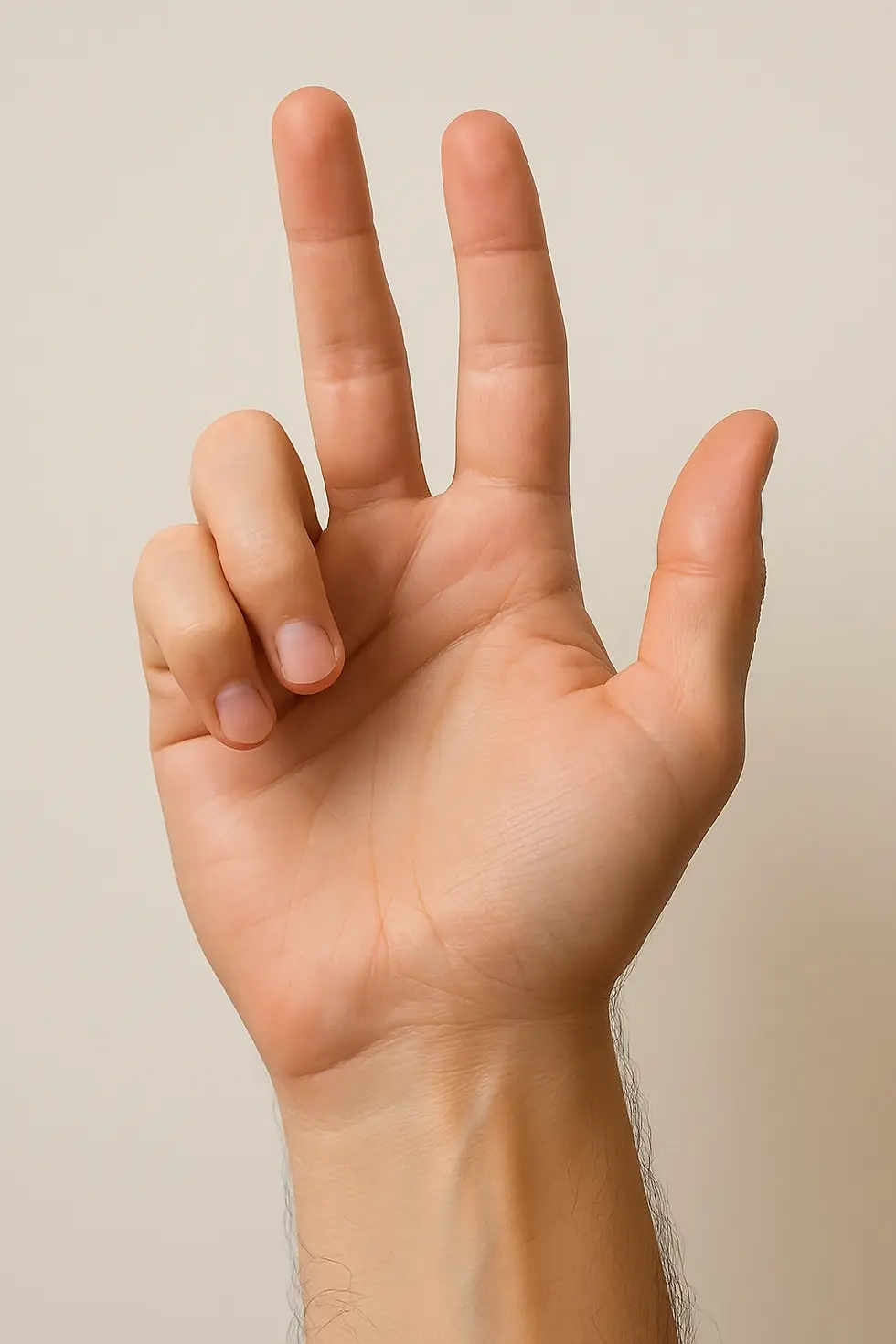
The Hand of Benediction is a characteristic clinical sign often associated with injury or pathology of the median nerve. The condition becomes apparent when the patient attempts to make a fist but is unable to flex the index and middle fingers at the metacarpophalangeal (MCP) and interphalangeal (IP) joints. As a result, these fingers remain extended while the other fingers flex normally. This specific presentation is caused by median nerve dysfunction, which impairs the function of the lateral lumbrical muscles responsible for flexing these joints.
Historical and Cultural Context
Historically, the Benediction Sign has been linked to cultural representations of blessings and greetings, in which an open hand with extended fingers was often used. Some historical analyses, such as the work by Futterman [1], have suggested that figures such as Peter, the first pope, may have had an ulnar neuropathy that influenced the traditional hand gesture used for blessings. It is important to note, however, that this specific condition affects the ability to abduct and flex the fourth and fifth fingers and differs from the Hand of Benediction, which is associated with median nerve pathology.
Clinically Relevant Anatomical Structures
The median nerve, which originates from the brachial plexus, primarily innervates the first and second lumbricals of the hand in addition to several other structures. In the Hand of Benediction, the inability to flex the second and third fingers is caused by injury to the median nerve. This nerve is essential for flexion at the metacarpophalangeal (MCP) and interphalangeal (IP) joints of these fingers.
In contrast, pathology of the ulnar nerve is associated with a condition known as "claw hand." This condition is characterized by hyperextension at the MCP joints and flexion at the IP joints of the fourth and fifth fingers. Ulnar nerve innervation of the medial lumbricals is essential for normal function of these fingers, and injury to this nerve results in characteristic changes in the appearance and function of the hand.
Clinical Presentation
Patients with the Hand of Benediction often experience numbness and muscle weakness, particularly in the second and third fingers. When the patient attempts to make a fist, these fingers remain extended because of impaired flexion at the metacarpophalangeal (MCP) and interphalangeal (IP) joints. This is a characteristic feature of median nerve injury, which impairs the function of the lateral lumbricals.
It is important to distinguish this condition from symptoms associated with the ulnar nerve, which instead affect the fourth and fifth fingers and may result in the condition known as "claw hand." Ulnar nerve pathology produces a different distribution of numbness and muscle weakness, often with hyperextension at the MCP joints and flexion at the IP joints of these fingers.
Differential Diagnosis
When diagnosing the Hand of Benediction, it is important to consider other conditions that may produce similar hand postures but arise from different underlying causes. Differential diagnoses include:
Rheumatoid arthritis (RA):
May cause deformities of the hand, including flexion and extension contractures. These deformities result from joint inflammation and damage to ligaments and tendons and may resemble the hand posture seen in the Hand of Benediction.
Typically accompanied by pain, swelling, and stiffness in multiple joints, which distinguishes it from median nerve injury.
Peripheral neuropathy:
May be caused by diabetes mellitus, alcohol misuse, or toxic exposures and can lead to numbness, muscle weakness, and loss of reflexes.
Symptoms are often diffuse and affect several nerves in the hand, unlike the specific presentation of the Hand of Benediction.
Ulnar neuropathy ("claw hand"):
Injury to the ulnar nerve can lead to excessive flexion of the fourth and fifth fingers with hyperextension at the MCP joints. This clearly differs from the impaired flexion of the second and third fingers seen in the Hand of Benediction.
Carpal tunnel syndrome:
Compression of the median nerve in the carpal tunnel can cause numbness, pain, and muscle weakness in the hand. Although this may be confused with the Hand of Benediction, carpal tunnel syndrome usually does not impair finger flexion when attempting to make a fist.
Tendon or muscle injury:
Direct injury to the flexor tendons or associated muscles may also cause impaired flexion of the second and third fingers, but this is most often associated with a specific history of injury.
Treatment and Management
Treatment of the Hand of Benediction focuses on managing the underlying median nerve injury and restoring hand function. Management may include:
Medication:
Non-steroidal anti-inflammatory drugs (NSAIDs) may be used to reduce pain and limit worsening of symptoms. This may help reduce inflammation around the nerve contributing to the symptoms.
Orthoses and support:
Hand or wrist supports may be used to minimize further compression of the nerve and avoid excessive flexion that could aggravate the condition.
Orthoses provide stabilization and may help reduce stress on the median nerve.
Physiotherapy and occupational therapy:
Stretching exercises: Focus on gentle stretching exercises to improve flexibility of the hand and fingers.
Strengthening exercises: Exercises to restore strength in the muscles of the hand, particularly those controlled by the median nerve, such as the lateral lumbricals.
An individualized exercise program developed by a physiotherapist or occupational therapist may help accelerate functional improvement.
Surgical intervention:
In severe cases where the median nerve is significantly compressed, such as in carpal tunnel syndrome, nerve release or decompression surgery may be necessary to reduce pressure on the nerve and relieve pain.
Surgical intervention is often considered when conservative treatment does not provide sufficient improvement within an established time frame.
Lifestyle changes and adaptations:
Avoid activities that place unnecessary strain on the wrist, such as prolonged keyboard use or tools that require repetitive movements.
Implement ergonomic adaptations in the workplace to reduce the risk of further nerve compression.
Sources:
Futterman B. Analysis of the Papal Benediction Sign: the ulnar neuropathy of St. Peter. Clinical Anatomy. 2015 Sep;28(6):696-701.
Floranda EE, Jacobs BC. Evaluation and treatment of upper extremity nerve entrapment syndromes. Primary care. 2013 Dec;40(4):925.
Hand of Benediction. What Is It, Causes, and More. Available from: https://www.osmosis.org/answers/hand-of-benediction ( Accessed, 19/07/2021).
FSUMedMedia. Claw Hand, Ape Hand, and the Sign of Benediction: Animated Review. Available from: https://www.youtube.com/watch?v=0AAligXLJ1A [Accessed, 19/07/2021]


