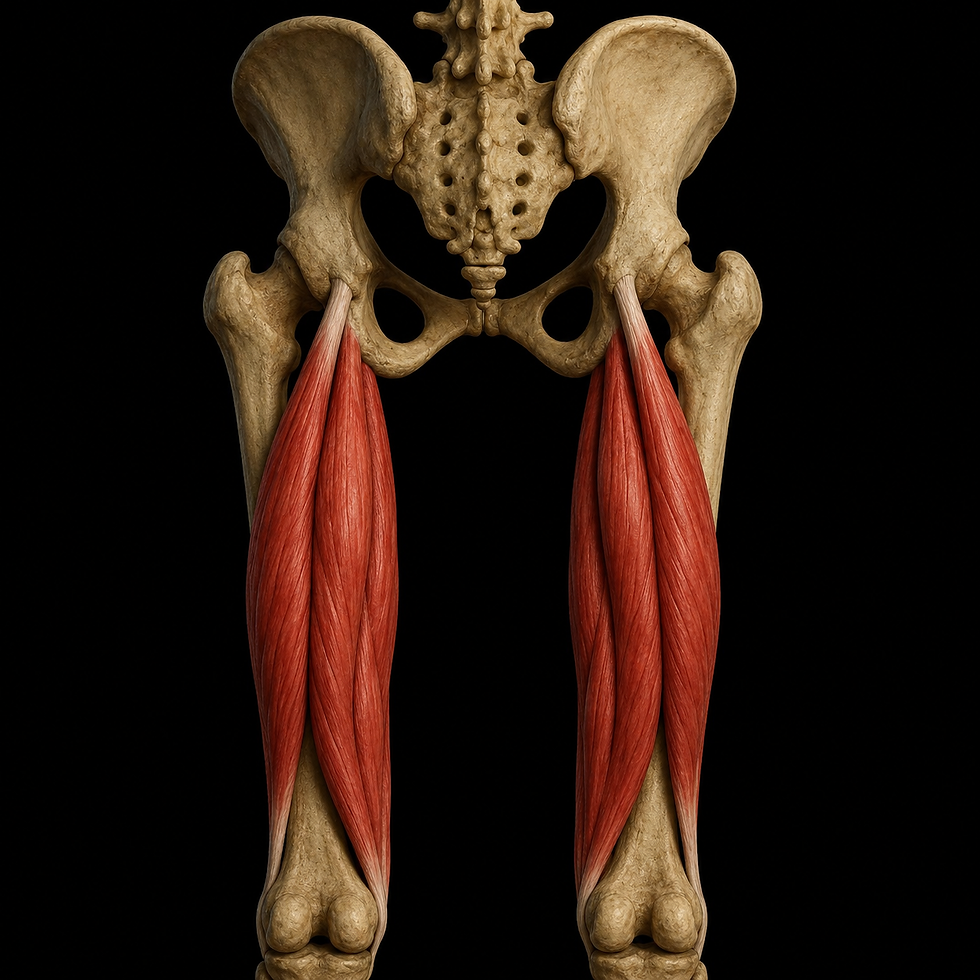
Quadratus Plantae

Quadratus plantae, også kjent som flexor accessorius, er en av de dype intrinsiske Quadratus plantae, also known as flexor accessorius, is one of the deep intrinsic muscles of the plantar aspect of the foot. Together with the lumbricals, it forms the second plantar muscle layer of the foot. The muscle is essential for normal gait by supporting the function of the flexor digitorum longus and maintaining the mechanical balance of the foot.

Origin and Insertion
Quadratus plantae is a two-headed muscle arising from different parts of the calcaneus:
Medial head
Originates from the medial surface of the calcaneus, just inferior to the sulcus calcanei, where the tendon of the flexor hallucis longus passes.
The medial fibres are thicker and constitute the main bulk of the muscle.
Lateral head
A smaller, more tendinous head originating from the lateral process of the calcaneal tuberosity.
The fibres are flatter and less voluminous than those of the medial head.
The two heads course anteriorly and merge into a single flat muscular tendon that inserts onto the lateral aspect of the tendon of flexor digitorum longus.The insertion is typically located at the point where the flexor digitorum longus tendon divides into four separate slips to toes 2–5. In this way, quadratus plantae influences all four lateral toes and assists in toe flexion in the midfoot and forefoot.
Anatomical variations exist, where some individuals lack attachment to the lateral slips (e.g. to the 4th and 5th toes), which may affect toe flexion strength and toe alignment during load-bearing.
Location and Anatomical Relations
Quadratus plantae is located deep within the central muscle compartment of the foot.
Superficially: The muscle lies beneath the flexor digitorum brevis, which completely covers it on plantar palpation.
Deep: Quadratus plantae overlies the deeper adductor hallucis and the interosseous muscles of the foot.
Laterally: The lateral plantar nerve and artery run close to the lateral surface of the muscle and course toward the lateral border of the foot.
Medially: The medial plantar nerve and artery pass along the medial side of the muscle, but are more separated than the lateral structures.
This close relationship between quadratus plantae and the plantar neurovascular structures gives the muscle clinical relevance, particularly in conditions involving plantar foot or heel pain.
Innervation
Quadratus plantae is innervated by the lateral plantar nerve, a branch of the tibial nerve (roots S1–S3).
Motor: This innervation allows precise muscle control during gait, particularly important during the push-off phase when the toes actively flex.
Sensory: The muscle itself has no direct sensory supply, but surrounding tissues are innervated by the same nerve roots, which may explain referred pain in cases of nerve irritation or injury.
Blood Supply
Quadratus plantae is supplied by a rich vascular network from several arteries:
Lateral plantar artery: Primary supply to the lateral portion of the muscle
Medial plantar artery: Supplies the medial portion, especially the medial head
Deep plantar arch: Provides important branches to the central part of the muscle
These vessels, branches of the posterior tibial artery, ensure reliable and continuous blood flow during both activity and rest.
Function and Biomechanical Significance
Quadratus plantae has a unique biomechanical role:
During contraction, the muscle pulls the tendon of the flexor digitorum longus more directly posteriorly toward the calcaneus, counteracting the oblique pull of the tendon during plantar flexion.
Without this muscle, the toes would tend to deviate during flexion, reducing gait efficiency.
The muscle is particularly important during the transition from stance phase to swing phase in gait. When the foot is plantarflexed, the flexor digitorum longus alone has limited capacity to flex the toes effectively. Quadratus plantae optimises the biomechanical alignment of the tendon, enabling stronger and more controlled toe flexion. This improves push-off and overall foot stability during walking.
Although quadratus plantae does not insert directly onto the toes, it plays a critical assisting role by modifying the line of pull of the flexor digitorum longus.
When the flexor digitorum longus contracts alone, it produces an angled force that tends to cause toe deviation (often medially). Quadratus plantae corrects this by pulling the tendon straight toward the heel, resulting in a more balanced, stronger, and more efficient toe flexion—especially important when the toes actively grip the ground.
Movements Assisted by the Muscle
Toe flexion at the metatarsophalangeal (MTP) joints
Quadratus plantae supports active flexion of toes 2–5 at the MTP joints by maintaining a straight line of pull in the flexor digitorum longus tendon.
This is particularly important during the terminal stance phase of gait, when the foot pushes forcefully against the ground.
Controlled plantar flexion of the toes
During walking, running, and jumping, the muscle ensures controlled plantar flexion of the toes, providing a stable and even contact surface with the ground.
Proper quadratus plantae function improves utilisation of the foot’s elastic properties and enhances force transmission.
Interaction With Other Muscles
Quadratus plantae works closely with several muscles to optimise foot function:
Flexor digitorum brevis and flexor digitorum longus
Quadratus plantae assists these muscles in toe flexion and ensures even load distribution. Without it, the flexors alone would lead to toe malalignment.
Lumbricals
The lumbricals originate from the tendons of the flexor digitorum longus. By adjusting the orientation of these tendons, quadratus plantae enables optimal lumbrical function—particularly flexion at the MTP joints combined with extension at the interphalangeal joints. This interaction contributes to fine motor control of the toes.
Adductor hallucis and abductor hallucis
These muscles stabilise the great toe and provide grip during gait, while quadratus plantae stabilises the lateral toes. Together, they ensure coordinated toe alignment and balanced loading of the forefoot.
Stabilising Versus Mobilising Function
Quadratus plantae serves primarily a stabilising function:
It stabilises the tendon of the flexor digitorum longus, improving control and force transfer to the ground.
This reduces the risk of overload injuries and malalignment.
During dynamic activities such as running and jumping, the muscle stabilises the central foot and prevents excessive toe movement, protecting toe joints and ligaments from overuse.
At the same time, quadratus plantae also has a mobilising role by assisting active toe flexion, enabling essential gripping and push-off movements.
Role Under Load and in Daily Activity
Quadratus plantae is especially important during increased loading conditions:
Gait cycle
During the final part of the stance phase (propulsion), the toes actively flex against the ground to generate an effective push-off. Quadratus plantae ensures that this toe flexion is well aligned and efficient, maximising force utilisation.
Running and jumping
In high-intensity activities, efficient force transmission is essential. Quadratus plantae ensures optimal toe positioning, improved ground grip, enhanced stability, and effective power transfer.
Standing and balance
During prolonged standing, quadratus plantae, together with other plantar muscles, contributes to foot stability and proper weight distribution.
This reduces the risk of foot fatigue and plantar pain and helps prevent deformities such as hallux valgus and hammer toes.pasienten vise redusert evne til å gripe eller presse effektivt fra bakken med tærne.
Compensatory Mechanisms in Weakness
In cases of weakness or injury to the quadratus plantae, other structures in the foot will compensate, often at the expense of optimal biomechanics:
Increased load on the lumbricals and flexor digitorum brevis, which may lead to muscle fatigue, tendinopathies, and pain.
Reduced flexion strength and control during push-off, increasing the risk of plantar fasciitis and metatarsalgia.
Increased stress on tendons and ligaments in the midfoot and forefoot, raising the risk of injuries such as plantar plate ruptures or metatarsal stress fractures.
Clinical Relevance
Quadratus plantae may be affected by several pathological conditions:
Heel and plantar foot pain: Irritation of the lateral plantar nerve between the two muscle heads may cause typical plantar heel pain.
Post-injury contractures: Following calcaneal fractures, the muscle may shorten and contribute to claw-like toe deformities.
Diabetic foot: Untreated abscesses or infections may lead to muscle necrosis, resulting in permanent deformities and altered gait patterns.
Biomechanical overload: Weakness or dysfunction of the muscle may reduce stability during gait, increasing load on more superficial muscles and tendons and elevating the risk of plantar fasciitis.
Clinical Findings and Typical Symptoms of Dysfunction
Quadratus plantae dysfunction often occurs in association with general foot overload, trauma, or underlying pathological conditions. The most common symptoms include:
Heel pain: Often due to irritation of the lateral plantar nerve, which may be compressed between the two heads of the muscle. Patients typically describe deep, aching, diffuse pain beneath the heel or along the lateral plantar aspect of the foot.
Plantar pain during walking: Weakness of quadratus plantae may reduce effective toe flexion during the push-off phase, resulting in pain or discomfort in the plantar forefoot. This pain is particularly pronounced after prolonged walking or standing.
Fatigue and reduced endurance: Chronic overload may cause muscle fatigue and pain, leading to reduced tolerance for prolonged weight-bearing activities such as standing or running.
Toe deformities: Weakness or contracture of quadratus plantae may contribute to deformities such as claw toes or hammer toes due to disrupted flexion balance of the toes.
Clinical Examination and Palpation
Clinical assessment of quadratus plantae includes both palpation and functional testing:
Palpation: The patient lies prone or supine with the foot relaxed. Quadratus plantae is palpated deep in the central plantar foot, from just anterior to the calcaneus toward the midfoot. The muscle can be activated by resisted toe flexion. Local tenderness or increased tone suggests muscle irritation.
Strength testing: Isolated muscle testing can be performed through active toe flexion against resistance. Reduced strength or pain during testing may indicate weakness or irritation.
Gait assessment: Observe gait for reduced push-off efficiency, excessive pronation, and diminished toe flexion during terminal stance. Patients often demonstrate reduced ability to grip or push effectively against the ground with the toes.
Relevance for Sport, Rehabilitation, and Physiotherapy
Quadratus plantae plays a central role in sport and rehabilitation, particularly for runners, dancers, and individuals exposed to high plantar loads:
Injury prevention: Optimal function of quadratus plantae is essential for preventing plantar fasciitis, tendinopathies, and stress fractures. Specific training programs targeting intrinsic foot muscles, including quadratus plantae, are important preventive strategies.
Rehabilitation of foot and ankle injuries: After calcaneal fractures, plantar fasciitis, or plantar plate injuries, targeted retraining of quadratus plantae is essential. This improves foot biomechanics and reduces the risk of recurrence.
Performance optimisation: In sports such as sprinting, long-distance running, and jumping, efficient foot function is critical. Strengthening and stabilising quadratus plantae can enhance push-off efficiency, improve force transmission, and reduce fatigue.
Postural Function
Quadratus plantae also contributes to maintaining proper postural control in standing:
It helps balance weight distribution across the transverse and longitudinal arches of the foot, reducing overload on individual structures.
Weakness may result in increased pronation or supination, potentially increasing load on the ankle, knee, and hip joints.
Compensation Patterns and Maladapted Loading
In cases of injury or weakness of quadratus plantae, typical compensatory strategies emerge:
Overload of flexor digitorum brevis: This muscle assumes a greater share of the flexion workload and may become fatigued or irritated.
Increased load on the plantar fascia: Reduced support from quadratus plantae increases strain on the plantar fascia, potentially leading to chronic plantar fasciitis.
Altered gait pattern: Patients may modify step length or loading patterns to avoid pain, which can result in secondary problems in the knees, hips, or spine.
Therapeutic Interventions
Strength training of intrinsic foot muscles: Specific exercises (e.g. short-foot exercise, toe spreading) to build strength and endurance in quadratus plantae and adjacent muscles.
Myofascial release: Massage, trigger point therapy, or dry needling to reduce muscle tension and pain.
Arch support and orthoses: In more severe or chronic cases, temporary foot orthoses may reduce load on the muscle.
Biomechanical gait analysis and retraining: Gait retraining and functional strengthening of foot musculature help correct malalignment and compensatory patterns.
Exercises for Quadratus Plantae
Quadratus plantae is essential for optimal foot function, gait mechanics, and prevention of foot-related disorders. Below is a detailed overview of selected exercises, based on research and clinical experience, that effectively strengthen and rehabilitate quadratus plantae.
1. Short-Foot Exercise
Target: Activates and strengthens quadratus plantae and other intrinsic foot muscles, improving foot biomechanics and stability.
Execution:
Sit or stand barefoot with the foot flat on the floor.
Keep the toes relaxed without curling them.
Gently draw the forefoot backward toward the heel, elevating the medial arch (“short-foot” position).
Hold for 5–10 seconds, relax, and repeat.
Dosage: 3 sets of 10–15 repetitions, daily.
Effect (evidence): Research demonstrates that the short-foot exercise significantly increases activation of quadratus plantae and intrinsic foot muscles, reducing foot pain and improving balance and functional stability (McKeon et al., 2015).
Rehabilitation and prevention: Suitable for all functional levels. Ideal for rehabilitation following plantar fasciitis or calcaneal fractures, and for injury prevention in athletes.
2. Toe Spreading
Target: Activates quadratus plantae and other intrinsic foot muscles, improving toe flexion strength and motor control.
Execution:
Sit with the foot relaxed and toes flat on the surface.
Actively spread the toes as far apart as possible without lifting them.
Hold for 5 seconds, then relax.
Repeat slowly and with control.
Dosage: 3 sets of 15–20 repetitions, 1–2 times daily.
Effect (evidence): This exercise increases selective activation of quadratus plantae and neighbouring intrinsic foot muscles, improving gait function and stability and preventing toe deformities such as hammer toes (Ridge et al., 2019).
Rehabilitation and prevention: Appropriate for all levels. Important after foot and ankle injuries and recommended as a preventive measure for runners and other athletes.
3. Resisted Toe Flexion (Elastic Band)
Target: Direct strengthening of quadratus plantae by loading toe flexion against external resistance.
Execution:
Sit with the foot flat on the floor, an elastic band placed around the middle phalanges of the toes.
Pull the toes downward toward the floor while keeping the heel stable.
Hold the maximal flexed position for 3–5 seconds, then slowly release.
Dosage: 3 sets of 12–15 repetitions, 3–5 times per week.
Effect (evidence): Resistance exercises effectively increase quadratus plantae strength, with studies demonstrating reduced pain and improved gait function in patients with chronic plantar foot disorders (Lynn et al., 2012).
Rehabilitation and prevention: Especially useful in rehabilitation after plantar fasciitis and foot trauma, and suitable for active individuals seeking stronger, more stable feet.
4. Towel Toe Curls
Target: Directly trains quadratus plantae, flexor digitorum longus, and flexor digitorum brevis, improving toe grip strength.
Execution:
Sit on a chair with a towel placed under the foot.
Use the toes to curl the towel toward you without lifting the heel.
Perform 10–15 “grips,” then reset the towel and repeat.
Dosage: 3–4 sets of 10–15 repetitions, daily.
Effect (evidence): Research shows increased muscle strength and control, along with reduced symptoms in plantar fasciitis and quadratus plantae-related pain (Jung et al., 2011).
Rehabilitation and prevention: Well suited for rehabilitation following plantar fasciitis or foot injuries, and for general foot strengthening in active individuals.
5. Balance Training on Unstable Surfaces
Target: Activation of quadratus plantae as a stabiliser in conjunction with other plantar muscles to improve dynamic stability and balance.
Execution:
Stand on one foot on a balance pad or wobble board.
Maintain balance for 30–60 seconds.
Focus on active toe engagement with the surface, without excessive toe curling.
Perform 3–5 repetitions per foot.
Dosage: 3 sets, 2–3 times per week.
Effect (evidence): Blance training effectively stimulates quadratus plantae and intrinsic foot muscles, improves proprioception and balance, and reduces the risk of overuse injuries and falls (Latey et al., 2018).
Rehabilitation and prevention: Highly recommended as a preventive strategy for athletes, older adults, and patients recovering from foot and ankle injuries.
References
Moore, K. L., Dalley, A. F., & Agur, A. M. R. (2014). Clinically Oriented Anatomy (7th ed.). Philadelphia, PA: Lippincott Williams & Wilkins.
Netter, F. (2019). Atlas of Human Anatomy (7th ed.). Philadelphia, PA: Saunders.
Palastanga, N., & Soames, R. (2012). Anatomy and human movement: structure and function (6th ed.). Edinburgh: Churchill Livingstone.
Standring, S. (2016). Gray’s Anatomy (41st ed.). Edinburgh: Elsevier Churchill Livingstone.